
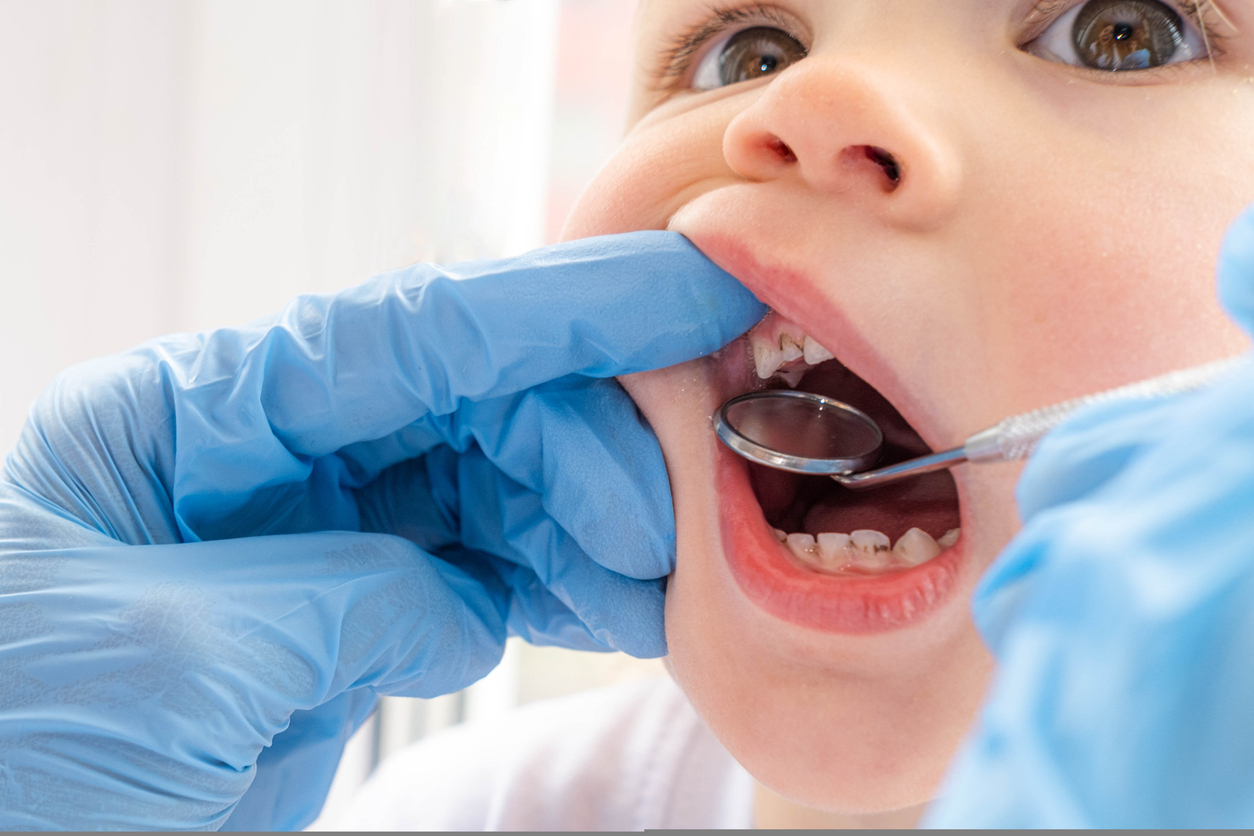
| Quick Answer: Early childhood caries (ECC) is tooth decay in children under age 6 — the most common chronic childhood disease, but also one of the most preventable. It’s driven by frequent sugar exposure (bottles, sippy cups, and snacks) feeding cavity-causing bacteria. Prevent it by avoiding bottles in bed, wiping or brushing teeth daily with fluoride toothpaste, limiting sugary drinks, and starting dental visits by age one. |
If you’ve heard the terms “baby bottle tooth decay” or “early childhood caries,” you may be wondering how serious it really is. At Smiles for Kids Dentistry in Albuquerque, we treat it often — and the encouraging news is that it’s largely preventable with a few consistent habits.
Here’s what early childhood caries is, why it happens, and exactly how to protect your child’s smile.
What Is Early Childhood Caries?
Early childhood caries (ECC) is tooth decay in children under age 6. It can range from chalky white spots near the gumline to advanced cavities that reach the nerve. It often shows up first on the upper front teeth, which are most exposed to sugary liquids. Despite being so common, it isn’t inevitable — and as pediatric dentists, we’re specifically trained to catch and treat it early.
What Causes It?
Cavities form when bacteria in the mouth feed on sugars and produce acid that wears away enamel. In young children, the biggest drivers are frequency and timing of sugar exposure:
- Bottles or sippy cups of milk, formula, or juice taken to bed or sipped all day
- Frequent sugary or starchy snacks
- Sharing spoons or cleaning a pacifier in your own mouth (which transfers bacteria)
- Not cleaning teeth and gums consistently
Early Warning Signs
- Dull white bands or spots along the gumline (the earliest stage)
- Yellow or brown discoloration on the teeth
- Sensitivity to hot, cold, or sweet foods
- Visible pitting or holes, swelling, or a child favoring one side when chewing
White spots are reversible with prompt care, which is why early detection matters so much.
How to Prevent Early Childhood Caries
- Never put your child to bed with a bottle of anything but water.
- Wipe gums after feedings, and brush twice daily with a rice-grain smear of fluoride toothpaste once teeth appear.
- Limit juice and sugary drinks; offer water between meals.
- Avoid constant grazing — group snacks into set times.
- Don’t share utensils or clean pacifiers in your mouth.
- Start dental visits by age one for fluoride and early checks.
Why It Matters — Even for Baby Teeth
Untreated decay in baby teeth can cause pain, infection, trouble eating and speaking, and damage to the permanent teeth forming underneath. Treating it early is simpler, more comfortable, and less costly than waiting.
Visit Smiles for Kids Dentistry in Albuquerque
With two pediatric dental practices located on the Westside and Northeast Heights — and orthodontics available — we’re one of the most comprehensive children’s dental teams in New Mexico. We care for kids from 9 months through age 18 (special needs to 26). If you’ve noticed white or brown spots on your child’s teeth, bring them in early.
Frequently Asked Questions
What is early childhood caries?
It’s tooth decay in children under age 6 — the most common chronic childhood disease. It ranges from white spots near the gumline to advanced cavities, often appearing first on the upper front teeth.
What causes early childhood caries?
Frequent sugar exposure — bottles or sippy cups taken to bed or sipped all day, sugary snacks, and shared utensils — feeding cavity-causing bacteria, combined with inconsistent cleaning.
How can I prevent cavities in my toddler?
Avoid bottles in bed, brush twice daily with a tiny smear of fluoride toothpaste, limit juice and sugary snacks, don’t share utensils, and start dental visits by age one.
Are white spots on my child’s teeth a cavity?
They can be the earliest stage of decay. White spots are often reversible with prompt care, so it’s worth having a pediatric dentist check them soon.
Do baby teeth cavities need treatment if they’ll fall out?
Yes. Untreated decay causes pain and infection and can damage the permanent teeth developing underneath. Early treatment is simpler and more comfortable.
|
Spotted white or brown spots? We truly care about your child’s health and happiness. Reach out to get your child’s appointment scheduled. We can’t wait to see you. Smiles for Kids Dentistry │ West: 9201 Eagle Ranch Rd NW, Albuquerque, NM 87114 • East: 2801 Eubank Blvd NE, Ste J, Albuquerque, NM 87112 │ (505) 892-9010 (West) / (505) 299-9606 (East) │ Contact Us → |